Essential storage only, unless you let us measure what helps athletes find us. Cookie policy

HRP is now built around gym sims and independent races. We no longer show official HYROX race results. Your sims, records and training stay. What's changing →
Learn · For gyms

How to run a CrossFit competition at your gym

An in-house competition or throwdown is the best day of the year at most boxes. It also has more moving parts than a class: three or four workouts, several divisions, heats on a tight schedule, judges counting reps, and a leaderboard everyone wants to see. This guide covers the lot, from choosing the workouts to publishing the final standings.

Free to sign up. Your first event is free for up to 100 athletes.

Athlete mid-burpee on a dark gym floor during a competition
One judge per athlete, counting every rep.
  1. Step 1

    Choose the workouts

    Three or four workouts that test different things, each with a clear standard.
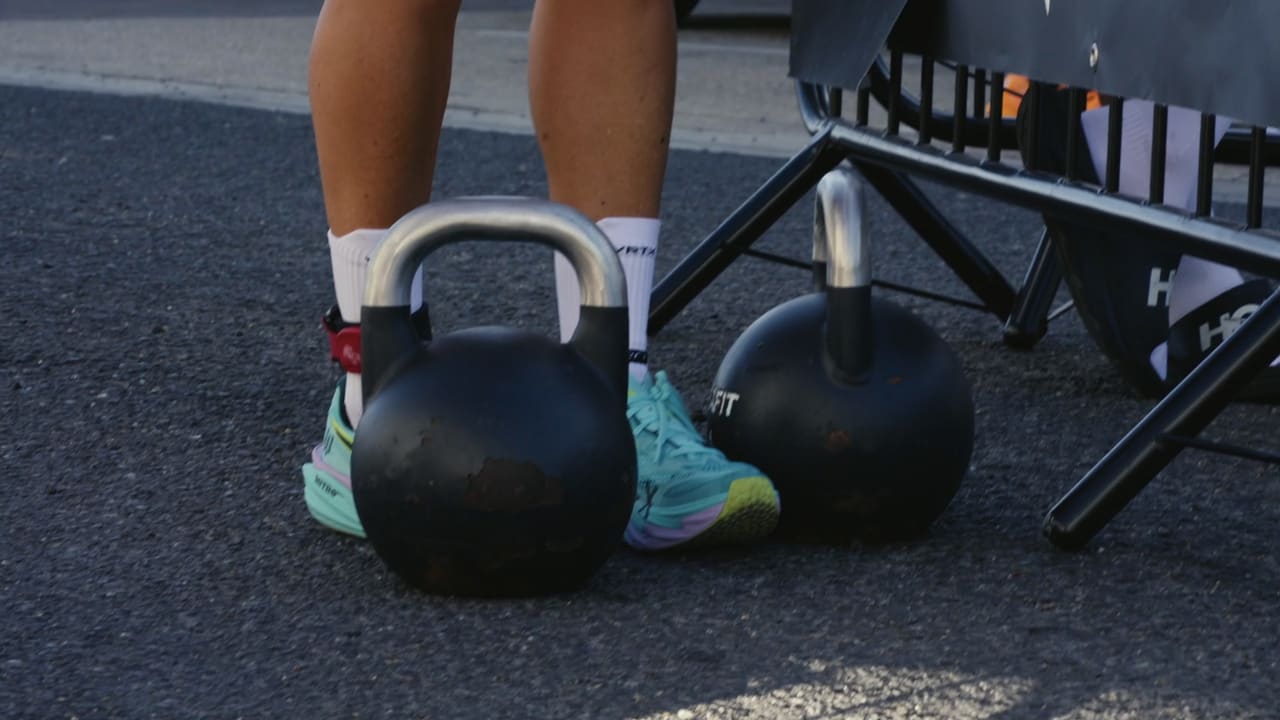
    Kettlebells set out for a competition workout
    Check you have enough of every piece of kit for a full heat.

    Most throwdowns run three or four workouts: something short and fast, something longer, a strength or skill piece, and sometimes a final for the top athletes. Mix time domains so no one type of athlete wins everything.

    For each workout write down the movements, reps, loads per division, the time cap and how it is scored: for time (with a cap), for reps or rounds, or a heaviest lift. Publish the workouts a week or two before so athletes can plan.
  2. Step 2

    Set divisions and teams

    Rx and Scaled for men and women, with teams if you have the numbers.

    Rx and Scaled divisions for men and women cover most boxes. Add Masters or Teens if your members ask for them, and pairs or teams of three or four for a social event. Keep loads and movement standards per division written down where every judge can see them.

    On HRP each division is its own category with its own leaderboard, and pairs and teams book together with every member signing their own waiver. See how it works

  3. Step 3

    Open registration and waivers

    Online entry, payment and a waiver from every athlete.

    Take entries online so you know numbers per division before you build heats. Collect payment and the waiver at the same time, with a parent or guardian signing for anyone under 18.

  4. Step 4

    Build heats and a schedule

    Heat size is your lanes; leave reset time between heats.

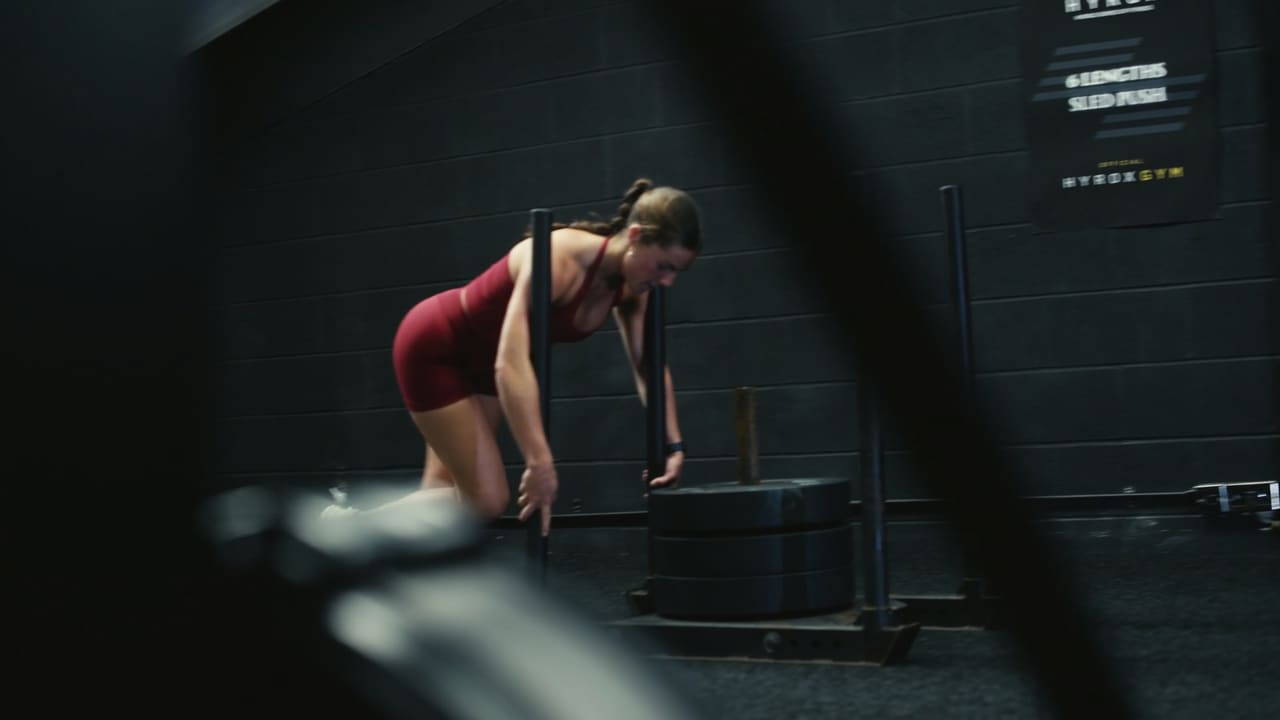
    Athlete on a sled pull during a heat at a gym competition
    Heat size is set by the lanes you can fully kit out.

    Your heat size is the number of lanes you can set up with full kit. Leave time between heats for judges to reset and for the next athletes to warm up. Run the biggest divisions first and finish with the final, when the room is fullest.

    Share heat times with athletes a few days before so nobody misses their start.

  5. Step 5

    Brief your judges

    One judge per athlete for most workouts, briefed on every standard.

    Competitions are judged one to one: a judge counts reps, calls no-reps and records the score. Run a briefing with the standards for every movement and a quick practice so everyone calls them the same way.

  6. Step 6

    Record scores as they happen

    Time, reps or kilos entered by the judge at the end of each heat.

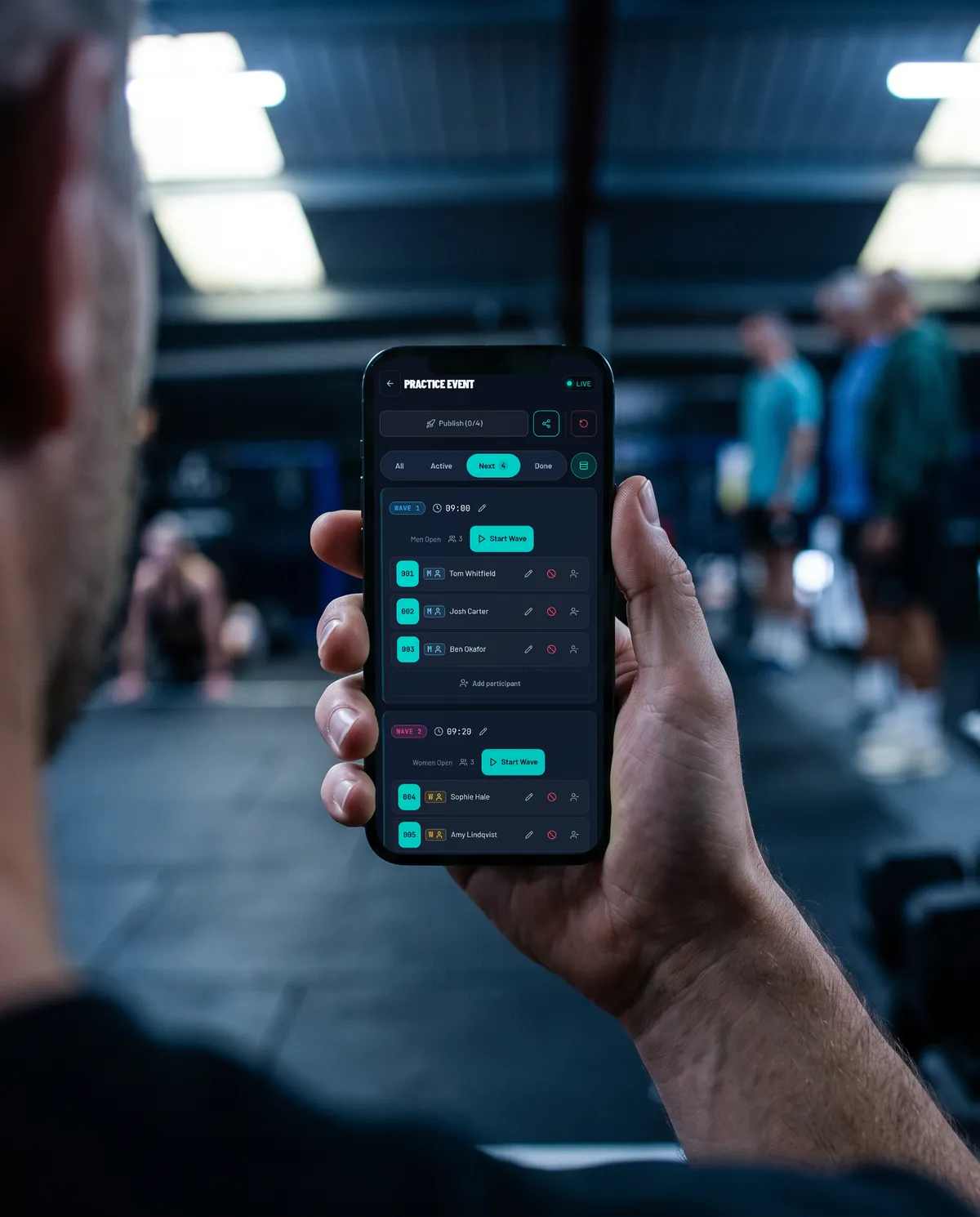
    Judge recording a score on a phone during a gym competition
    Judges enter the time or the reps straight from the floor.

    Scorecards on clipboards mean someone typing results into a spreadsheet while the next heat starts, and mistakes on the leaderboard. Judges entering the score on a phone the moment the heat ends removes both.

    On HRP judges open a link on their own phone and record each athlete's time, reps, calories or kilos as the heat ends. No accounts or hardware needed. See how it works

  7. Step 7

    Rank with a points table

    Points for placing in each workout, lowest or highest total wins.

    Most throwdowns rank on placing points: first in a workout scores 1 (or the most points), and the totals decide the podium. It stops one huge score in a single workout deciding everything, and it is easy for athletes to follow.

    HRP ranks by total time, total score or points, and keeps a points table across a series if you run several events in a season. See how it works

  8. Step 8

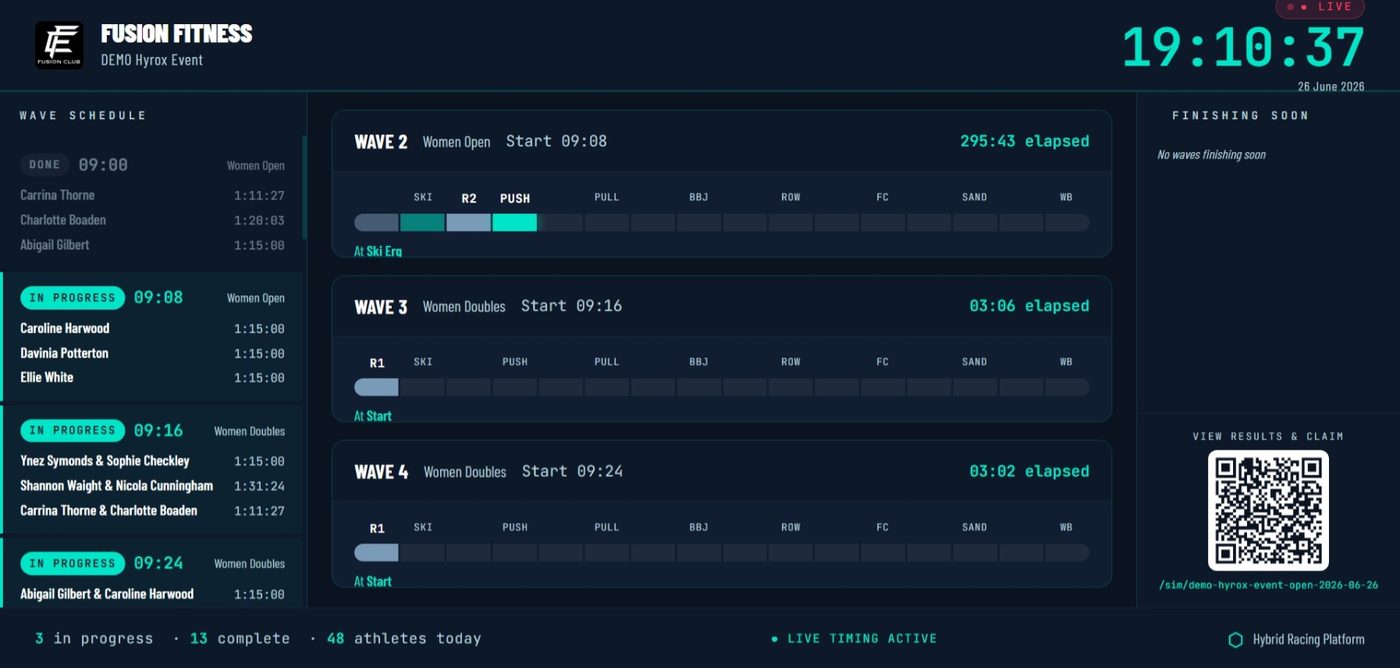
    Show the leaderboard live

    A screen with the standings after every heat.

    Live leaderboard on a gym TV during a competition
    Standings on the TV after every heat.

    Put the leaderboard on a TV so athletes and spectators see the standings move after each heat. It builds the tension for the final and keeps people in the building.

  9. Step 9

    Publish results and announce the next one

    Final standings the same afternoon.

    Publish the final standings and every athlete's scores as soon as the last heat finishes, then tell everyone when the next one is.

Throwdown checklist

  • 3 or 4 workouts, scored for time, reps or load
  • Time caps and tie-breaks written down
  • Rx and Scaled divisions (plus Masters, Teens, teams)
  • Loads and standards per division
  • Online entry, payment and waivers
  • Heats sized to your lanes
  • Schedule shared with athletes
  • One judge per athlete, briefed
  • Scores entered on phones
  • Points table
  • Live leaderboard on a screen
  • Results the same afternoon

Questions organisers ask

How many workouts should a gym competition have?

Three or four for a one-day throwdown, plus an optional final for the top athletes in each division. More than that and the day runs long and athletes fade.

How do you score a CrossFit-style competition?

Score each workout as it is done (time, reps, rounds or load), rank athletes within each workout, award placing points and add them up. The lowest total (if first place scores 1) or the highest total wins.

How many judges do I need?

One judge per athlete in a heat for most workouts, plus a head judge. With six lanes you need six to eight judges, rotating so they get breaks.

What divisions should I offer?

Rx and Scaled for men and women covers most gyms. Add Masters, Teens or a team division if enough members would enter.

Is there software to run a throwdown?

Yes. HRP handles registration and payments, waivers, heats, score entry on judges' phones, points tables and a live leaderboard, with results published the same day.

What does it cost?

Signing up is free and your first event is free for up to 100 athletes. After that it is £1 per athlete.

Run your next throwdown on HRP

Registration and payments, waivers, heats, score entry on judges' phones, points tables and a live leaderboard, with results for every athlete the same day. Free to sign up, first event free for up to 100 athletes.

CrossFit is a trademark of CrossFit, LLC. Hybrid Racing Platform is independent and not affiliated with or endorsed by CrossFit; the name is used here only to describe a style of competition.